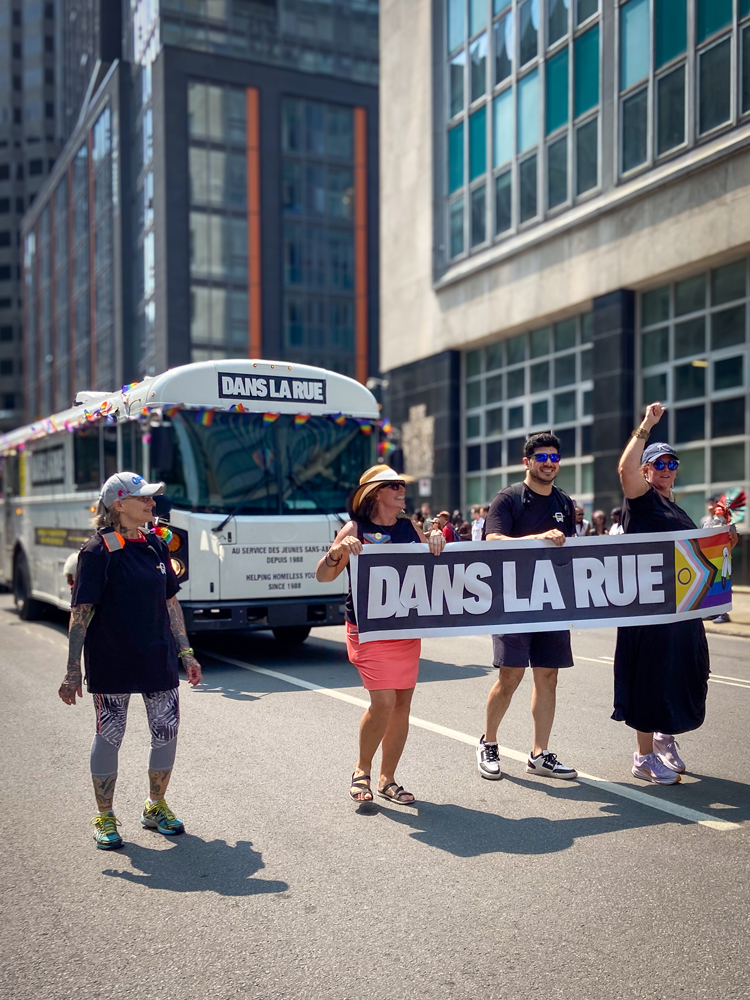
This past weekend was all about Pride in Montreal, and Dans la rue was honoured to be a part of the celebrations.
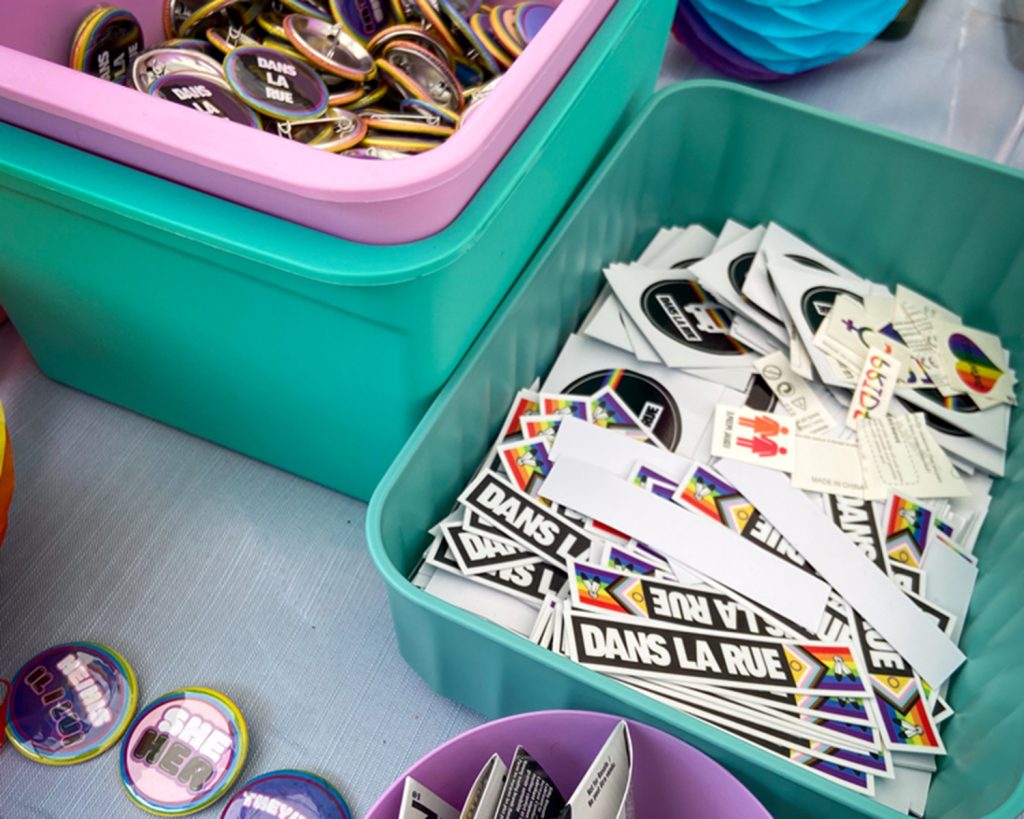
Our Community Days booth got people talking, sporting a range of flags representing the diversity of gender identities and sexual orientations, as well as a Pride-themed version of the Dans la rue logo.
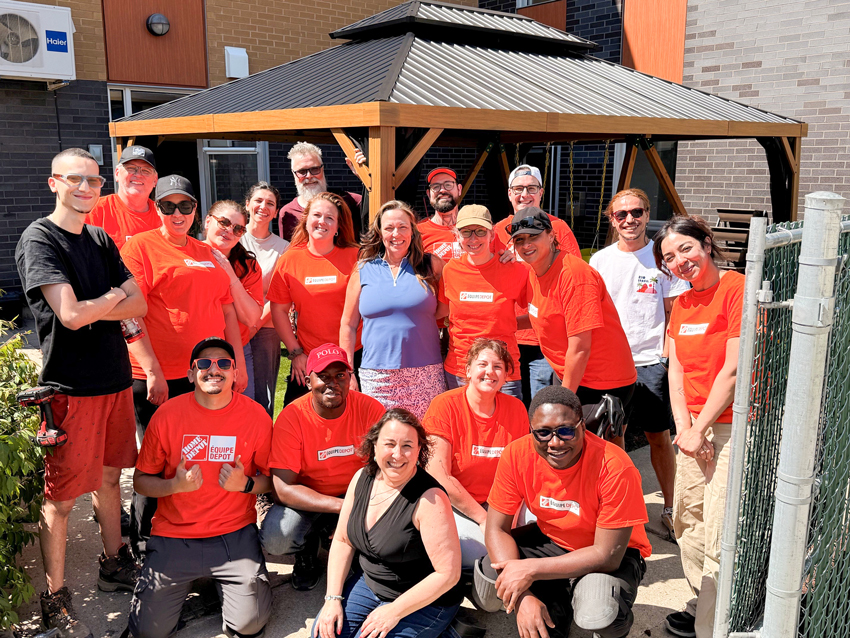
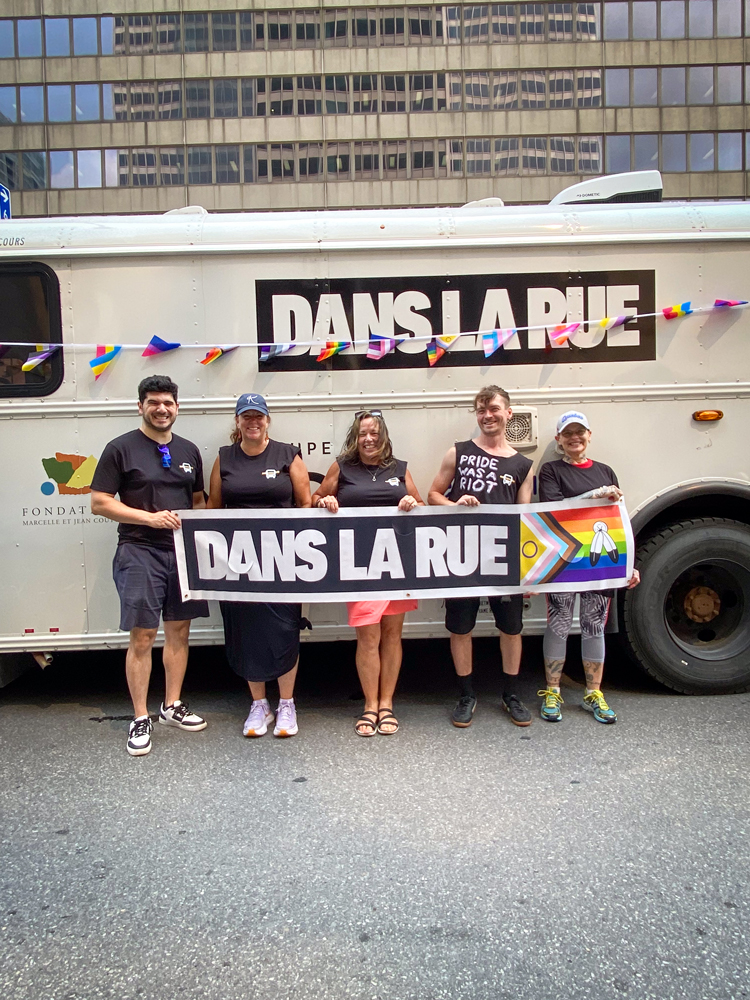
Staff members and volunteers were on hand to talk about the various services we offer, answer people’s questions and connect with those interested in learning more about the work we do.
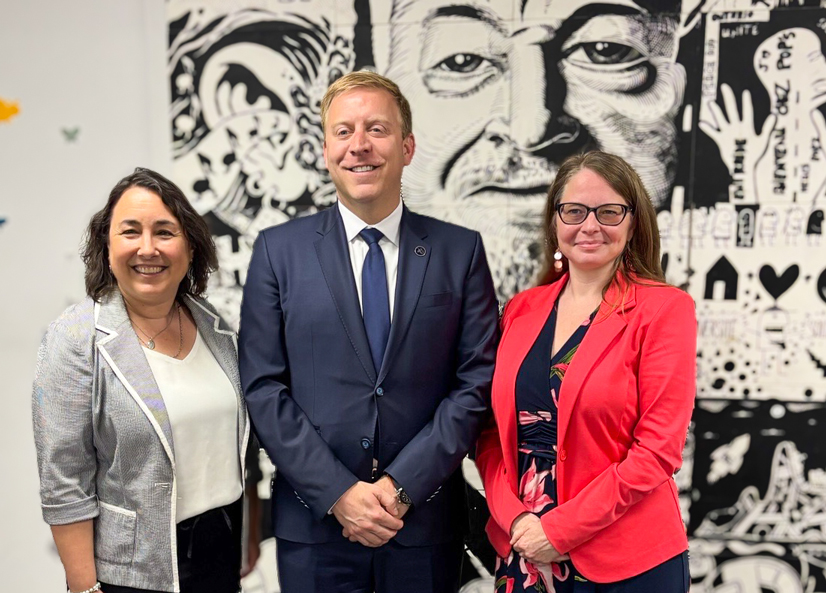
Our presence at the festival also helped us forge stronger ties with organizations serving the 2SLGBTQIA+ community and discuss issues that directly affect the youth we support.
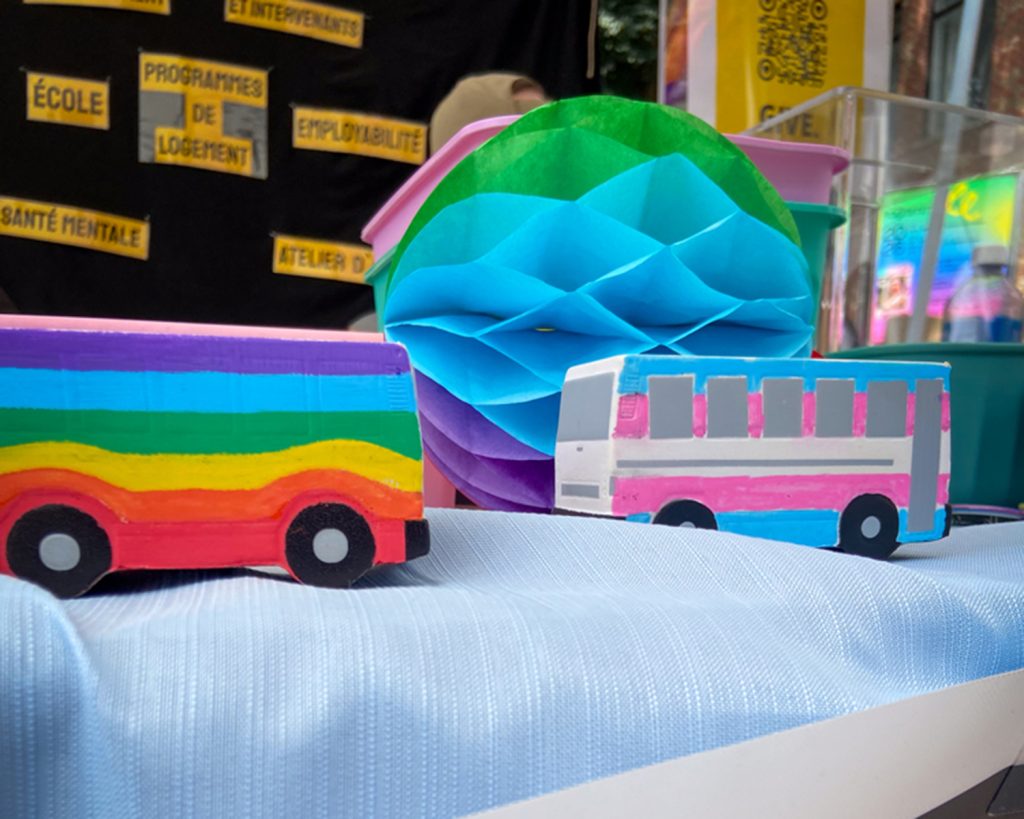
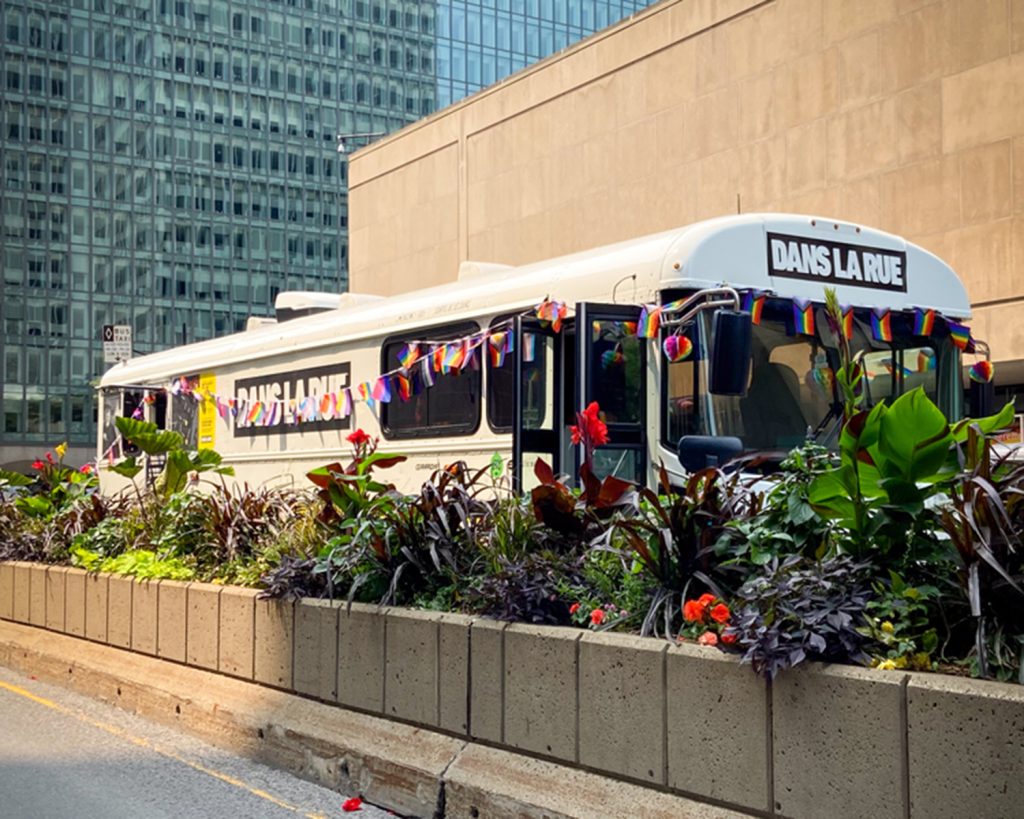
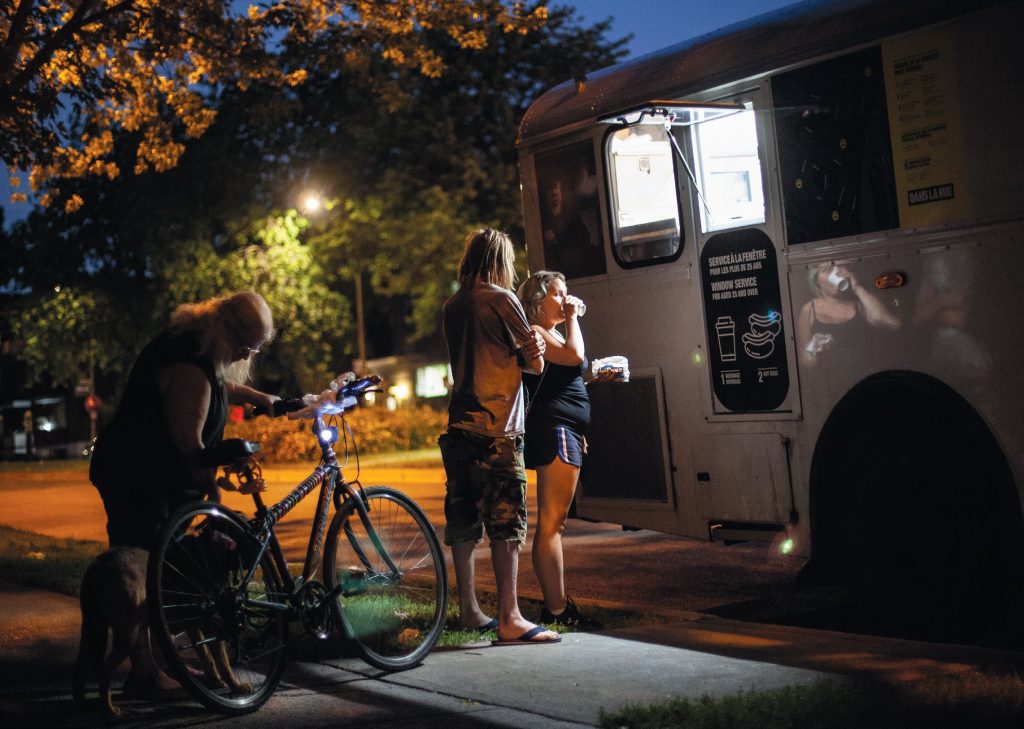
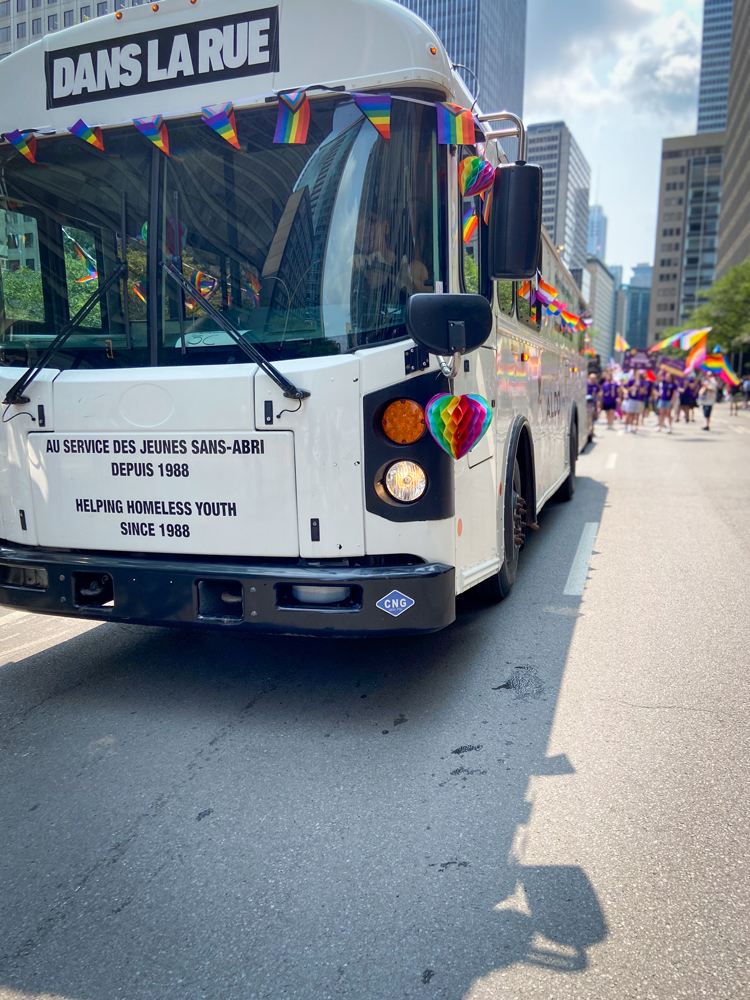
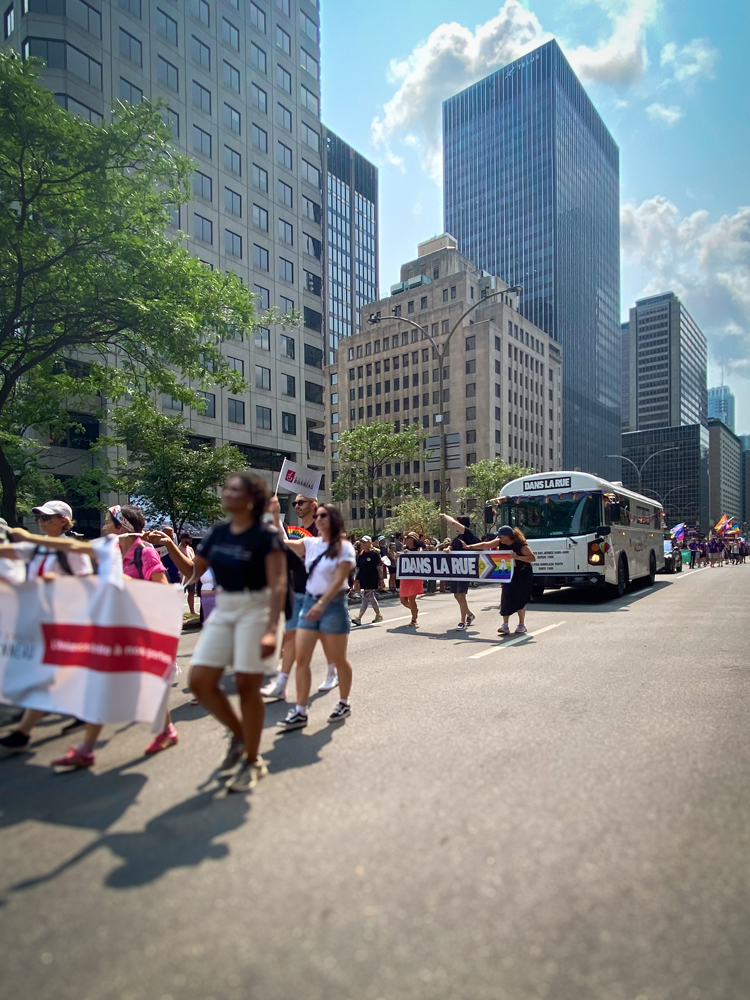
Decked out in Pride colours, the iconic Dans la rue Van rode in the closing parade, travelling along René-Lévesque Boulevard with hundreds of other organizations, as thousands cheered on.
The banner we carried emphasized that no one should be marginalized because of their gender identity or sexual orientation.
Why being there matters
The connection between youth homelessness and Pride may not be immediately apparent for some. Yet the data shows that 2SLGBTQIA+ people are disproportionately affected by housing instability and homelessness.
Even though 2SLGBTQIA+ people are a minority in Canada (4%), they are overrepresented in homelessness counts (13%). In fact, a number of Canadian studies estimate that 30% to 40% of youth experiencing homelessness identify as 2SLGBTQIA+.
This unfortunate reality stems from numerous factors that increase the risk of social, housing and economic instability.
Family rejection: A major contributing factor
Family is the first safety net for most young people. When these ties are fragile or non-existent, the consequences can be significant.
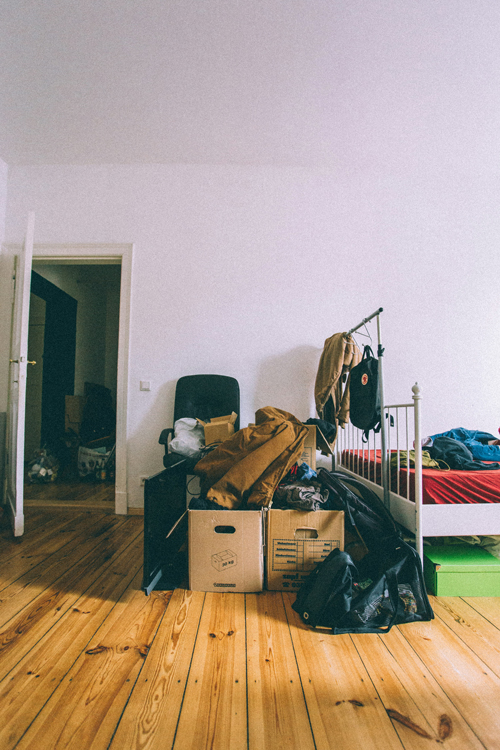
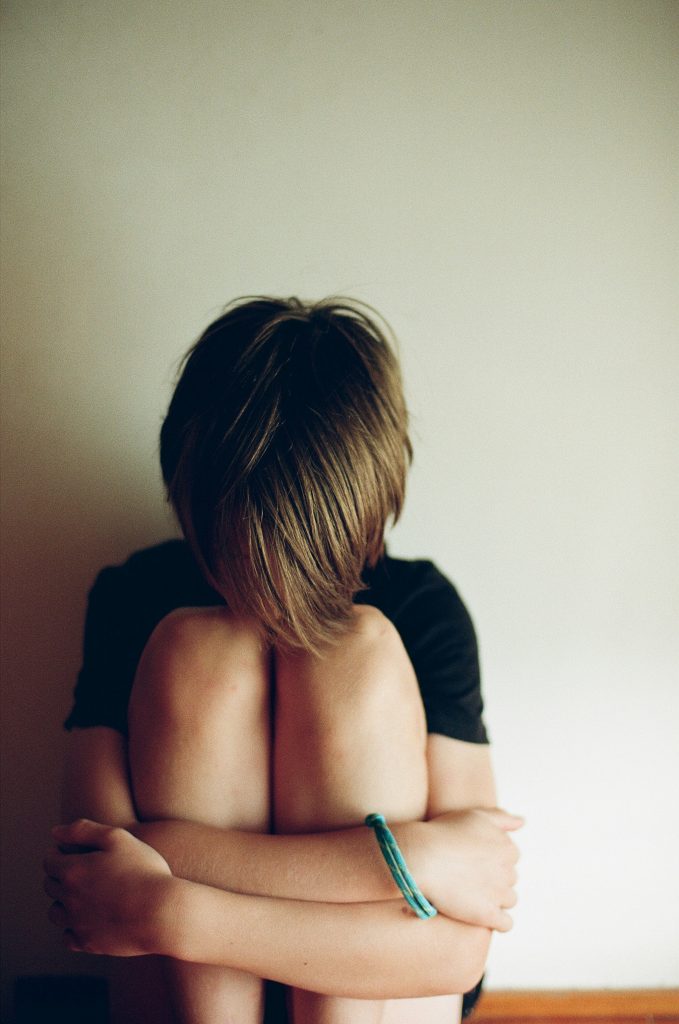
Coming out can sometimes elicit negative reactions, ranging from a lack of understanding to psychological, verbal and physical abuse. As a result, some young people can find themselves in conflict-ridden family environments where they no longer feel safe. Others have no choice but to leave home to protect their safety and well-being.
Multiple levels of discrimination
Discrimination is unfortunately not limited to the family setting. Many people with diverse sexual orientations and gender identities report having experienced harassment, bullying and exclusion in school and youth centres, online, at work and in public spaces.
These repeated experiences can have a detrimental impact on academic achievement, social integration and personal development. For some, they can contribute to a feeling of isolation that makes it even harder to ask for help when difficulties occur.
Barriers to employment and housing
Discrimination can also have concrete repercussions on living conditions. For example, many members of the 2SLGBTQIA+ community — especially trans and non-binary people — have trouble finding work. The fear of being judged, hiring bias and workplace discrimination can hinder their employment opportunities and adversely impact their financial stability.
Finding a place to live can also be a challenge. Some individuals report incidents of discrimination while searching for housing or interacting with landlords. Given the scarcity of available apartments, these additional barriers can increase the risk of housing insecurity and homelessness.
When it becomes difficult to ask for help
Even when it comes to support services that are supposed to be available to everyone, 2SLGBTQIA+ people can encounter significant barriers.
Historically, many services for people experiencing homelessness have followed a gender-binary model, with services segregated to serve men or women. Although many organizations have evolved over the years to be more inclusive, this tendency can still be challenging for trans, non-binary or questioning youth.
Having to explain or justify their identity, being misgendered or fearing hostility can create a profound sense of unease and discourage them from reaching out for help.
Ultimately, the accessibility of a service depends on its ability to provide a welcoming, respectful and safe environment for everyone who uses it.
Significant impacts on mental health
Repeated rejection, discrimination and social exclusion can have serious repercussions on mental health.
2SLGBTQIA+ people are more likely to experience psychological distress, anxiety and depression if they do not receive adequate support or recognition in their environment.
These challenges are only exacerbated by housing instability and financial hardship.
Creating truly inclusive communities
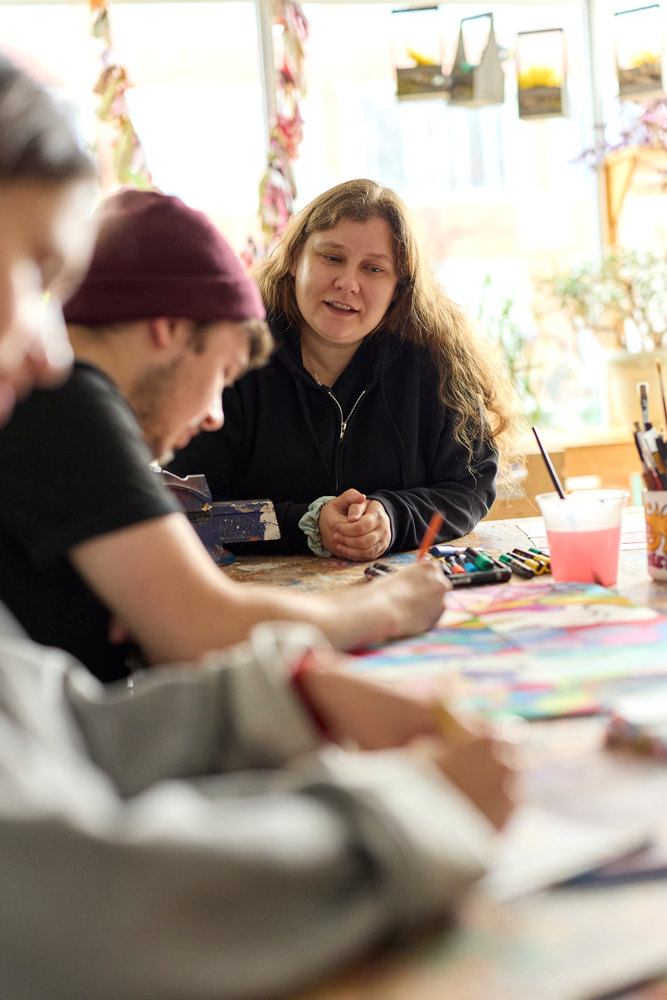
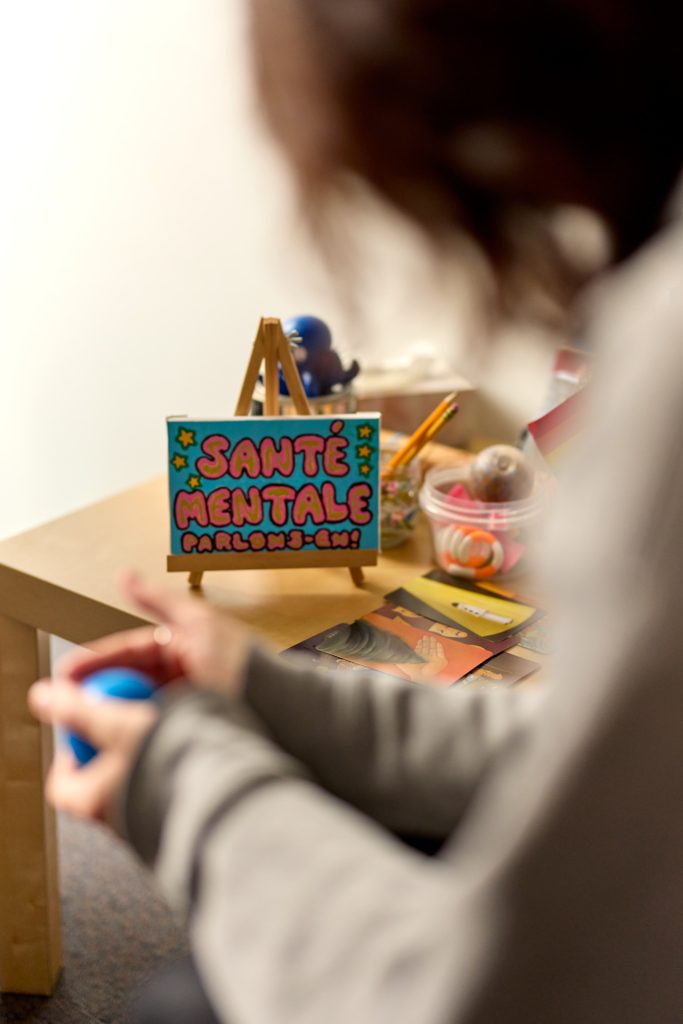
For Dans la rue, inclusion isn’t limited to flying a flag or celebrating diversity once a year. It is about taking concrete action every single day: making safe spaces available to everyone, embracing practices that are respectful of gender diversity, training counsellors and acknowledging the realities specific to members of the 2SLGBTQIA+ community.
Having a place where 2SLGBTQIA+ people can truly be themselves means more than making them feel welcome — it means protecting their safety, dignity and survival.
That is why Dans la rue’s involvement in Pride isn’t just a symbolic gesture. It’s an opportunity to reiterate our commitment to youth and reaffirm that everyone deserves access to support that is respectful, safe and free from judgment.
No one should face homelessness for being who they are.
Join us in supporting all the youth we are here to serve!
Glossary
Trans (ou transgenre)
A person whose gender identity differs from the sex they were assigned at birth.
2SLGBTQIA+
An acronym encompassing Two-Spirit, lesbian, gay, bisexual, trans, queer, intersex, asexual and questioning people and others who identify as part of sexual and gender diverse communities.
Gender expression
The way a person manifests or expresses their gender through their appearance, behaviour or self-presentation.
Sexual orientation
A person’s emotional, affective or romantic attraction to other people.
Two-Spirit person
A term used by some Indigenous people to describe an identity that may encompass cultural, spiritual, sexual and gender dimensions specific to various Indigenous peoples.